
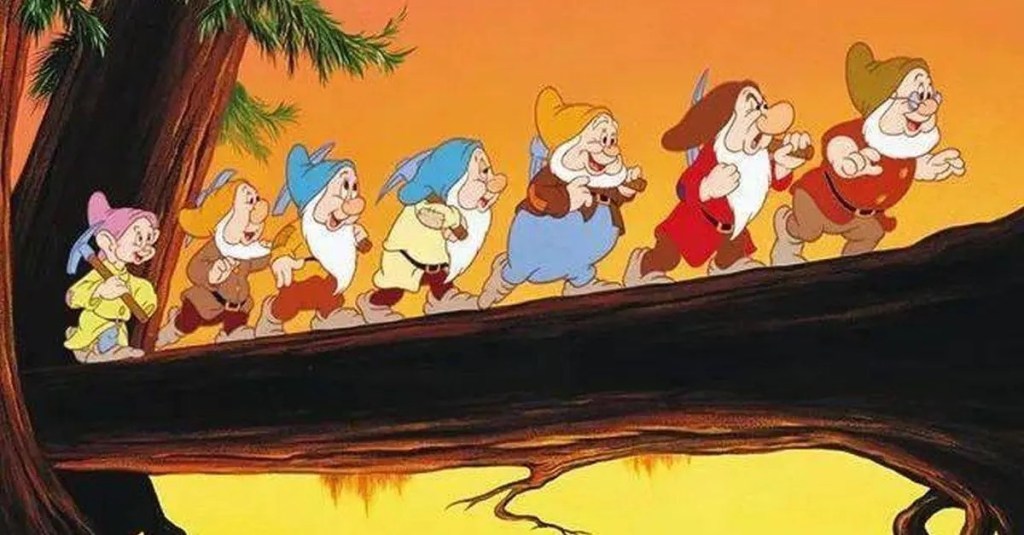
Snow White and the Seven Dwarfs was not the first film inspired by the original fairy tale. That honor goes to a lost silent film released in 1902 and titled simply Snow White. Disney’s Snow White was the first animated adaption and the first feature length animated film released in the US. The movie may not have aged particularly well but that doesn’t change the film’s historical relevance nor does it change Snow White’s artistic merit. Despite being made 88 years ago, the film’s animation remains impressive.
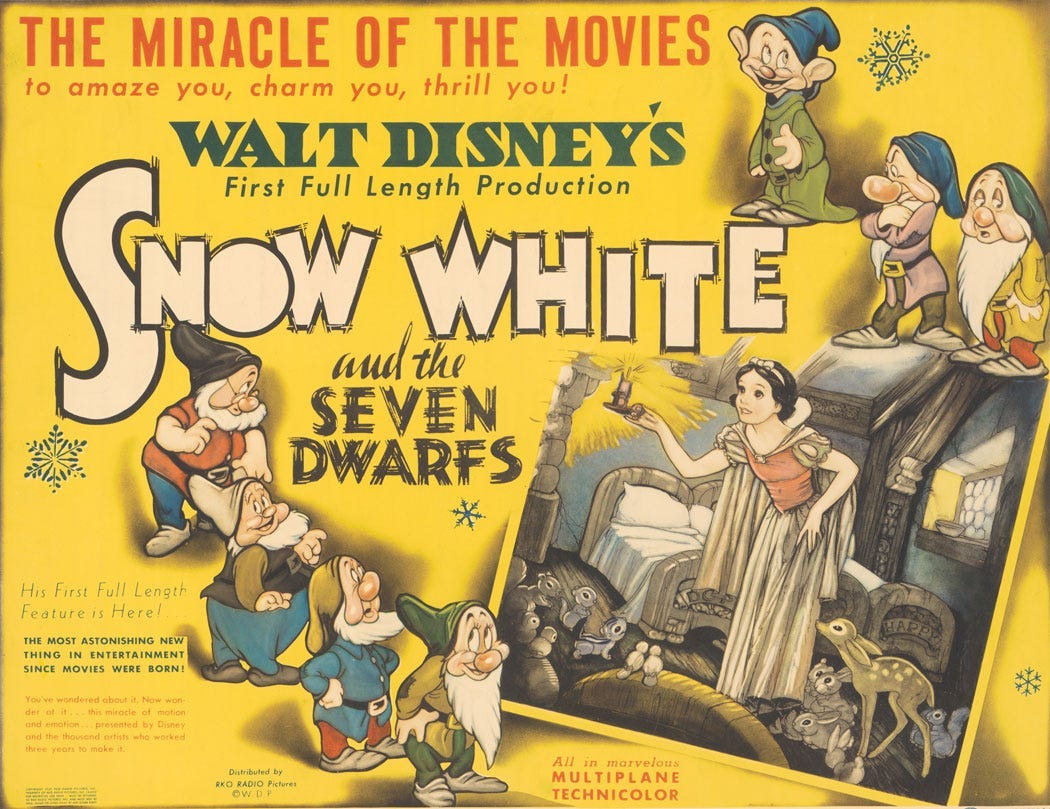
Snow White’s historical relevance begins with it being the first classical animated film. Also referred to as cel animation, it’s a form of animation where each frame is hand drawn. The technique became the most popular form of animation lasting through the 20th century. Snow White took around 3 years to make with 750 artists contributing to the animation. There was a total of 2 million paintings to complete in those 3 years and $1.4 million spent.
The film was a critical and commercial success bringing in a wapping $8 million international, $177 million when adjusted. The film’s success allowed Disney to build their Burbank Studio. At the time of the film’s release, Disney was known for their animated shorts that played in theaters prior to the feature film. Disney wanted to make a film that could compete with the commercially successful live action films at the time. Following a few years of their Silly Symphonies series, Disney decided to embark on an ambitious venture. They were going to make the first full length animated film that was an artistic and technical achievement. They also wanted it to be a financial one as well. After spending $1.4 million to make the film, they needed it to be.
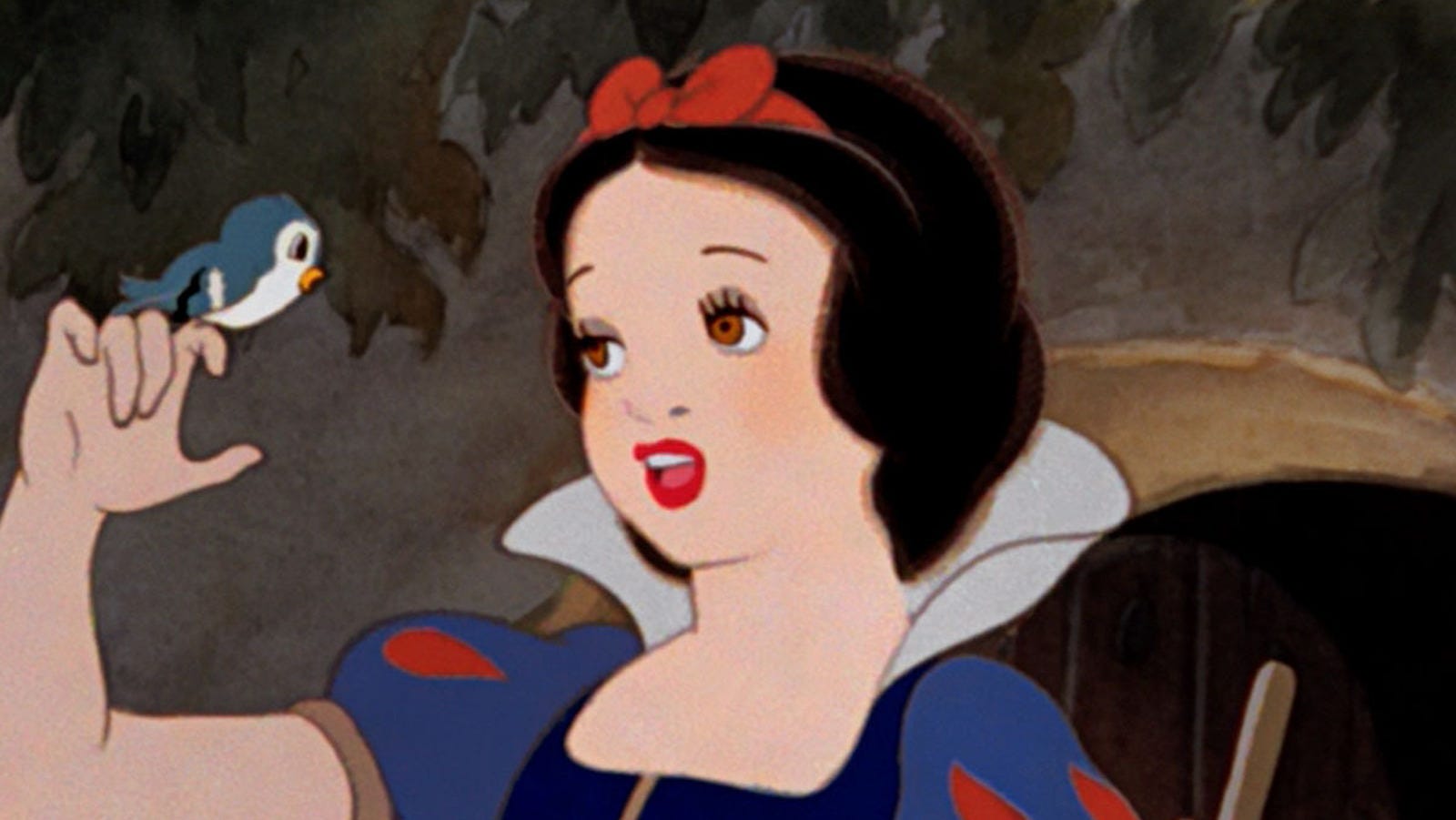
Walt Disney decided on making Snow White his first feature due to the fond memories of a Snow White short film he saw as a kid.
“I don’t know why I picked Snow White. It’s a thing I remembered as a kid. I saw Marguerite Clarkin it in Kansas City one time when I was a newsboy. They had a big showing for all the newsboys. And I went and saw Snow White. It was probably one of my first big feature pictures I’d ever seen. That was back in 1916 or something. Somewhere way back. But anyways, to me I thought it was a perfect story. I had the sympathetic dwarfs and things. I had the prince and the girl. The romance. I had the heavy. I just thought it was a perfect story.”
In the making of Snow White, they used a Multiplane Camera, an invention by Walt Disney that allowed you to see depth in animation. The camera was used in Disney’s Oscar winning short The Old Mill, a Silly Symphony released a month before the premier of Snow White.
One of the greatest concerns of the film was whether or not people would respond to the more emotional aspects of it. Disney was used to making slapstick animation but would they love drama in their animated films. Well, according to the reviews and reception from audiences, they loved it. Upon the films release, Snow White was a success. Snow White and the Seven Dwarfs made people laugh and when Snow White was poisoned they cried with the men that loved her.
The beauty of Snow White brought about by technical animation and Multiplane Camera was one of the things that made audiences connect with the material. The world and its characters become dimensional beings and despite them being animated, the audience relates to them the same way they do when watching live action films. The beauty of the world of Snow White looks like a gorgeous painting, a place we could really be.
Time Magazine said Snow White was,
“as exciting as a Western, as funny as a haywire comedy.”
Daily Verity had many nice things to say,
“Snow White is the genius of craftsmanship which can make an endless series of line drawings and color washes so eloquent in human expression and trouble and antic joy, so potent in evoking audience emotion, laughter, excitement, suspense, tears. Yes, indeed—tears!”
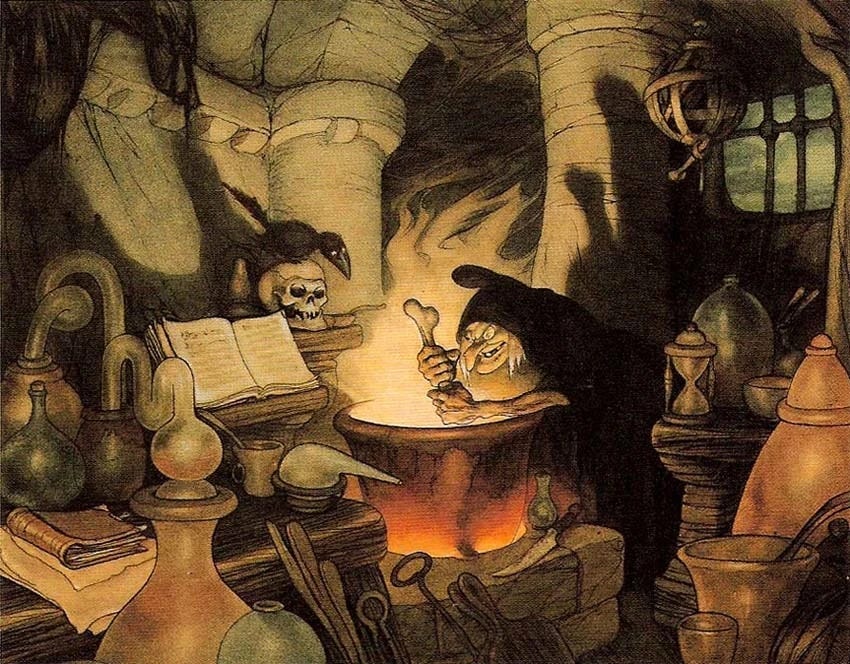
With 750 artists working on Snow White over the course of 3 years, there were bound to be many influences on the film. German Expressionism was a big inspiration for the film, particularly the films more horror-esque moments. Gustaf Tenggren was a Swedish illistrator and animator. Inspired by the work of Arthur Rackham, Tenggren had a strong use of shadow, similar to German Expressionism. Gustaf worked on the film as a concept artist as well as its non-animated tie ins.
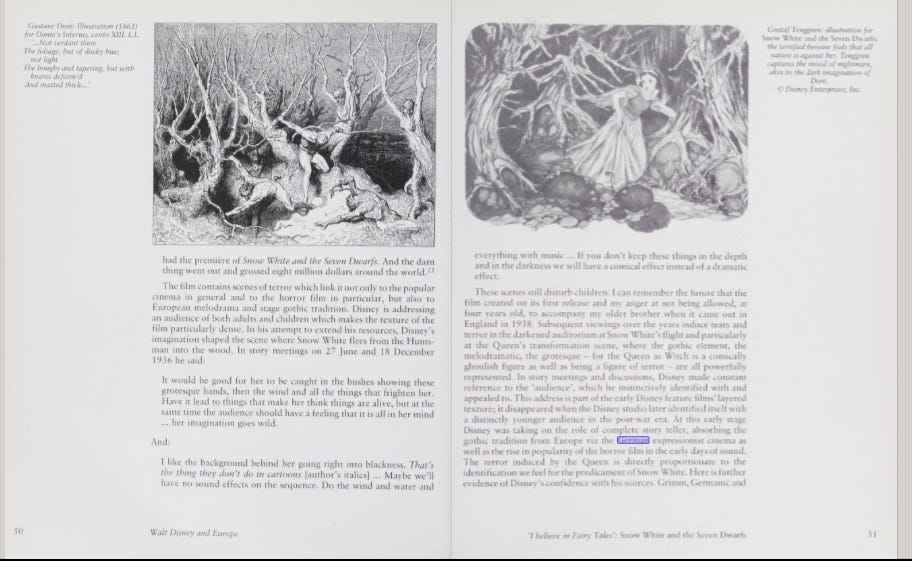
In the book Walt Disney and Europe: European Influences on the Animated Feature Films of Walt Disney you will find many images from artists that worked on the film, inspirations from artists throughout Europe and images of places that were used as inspiration. On page 50, Disney said…
It would be good for her to be caught in the bushes showing these grotesque hands, then the wind and all the things that frighten her. Have it lead to things that make her think things are alive, but at the same time the audience should have a feeling that it is all in her mind … her imagination goes wild. Like the background behind her going right into blackness. That’s the thing they don’t do in cartoons [author’s italics] … Maybe we’ll have no sound effects on the sequence. Do the wind and water and everything with music. If you don’t keep these things in the depth and the darkness. We will have a comical effect instead of a dramatic effect.
In the 1920s there was an influx of people in the film industry from Germany. With them they brought popular techniques that they would utilize in Hollywood films. In the late 20s and through the 30s in particular, German Expressionism was a big part of the US film industry.
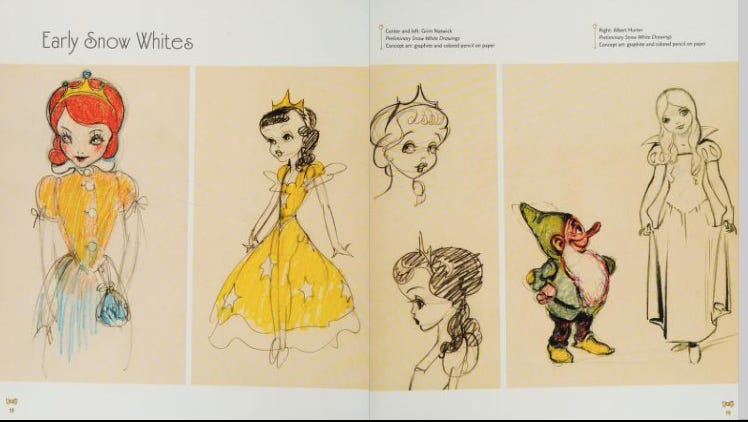
The book Snow White and the Seven Dwarfs: The Art and Creation of Walt Disney’s Classic Animated Film provides a look at the artistic process during the making of the film. From early iterations of Snow White to the process of creating the Dwarves homes. Viewing these various depictions lets us in on the details of their inspiration and how they utilized it. In the final product we are presented with a colorful palette, drenched in shadow of its horror scenes. As an audience we see the world as Snow White does. All its beauty and all its darkness.
Looking at Snow White Through a Modern Lens
Magic Mirror on the wall, who’s the fairest one of all.
Snow White and the Seven Dwarfs
Comparing Snow White and the Seven Dwarfs to the animated shorts that came before it, the film looks different. It is a painting come to life. The pages of a fairy tale moving beautifully on screen. From a modern perspective it might not seem like much in comparison to what came later; but Snow White’s innovation is visible from start to finish.
There are several moments that lean into the horror. From the moment the Queen shows us the box she wishes Snow White’s heart to be placed in, we are presented with the horror in Snow White’s life. She is nearly killed before running into the woods away from the Huntsman who was sent to kill her. The woods are a scary place and this is where the German Expressionist influences are most present. The darkness and shadow, and the various angles are reminiscent of the movement.
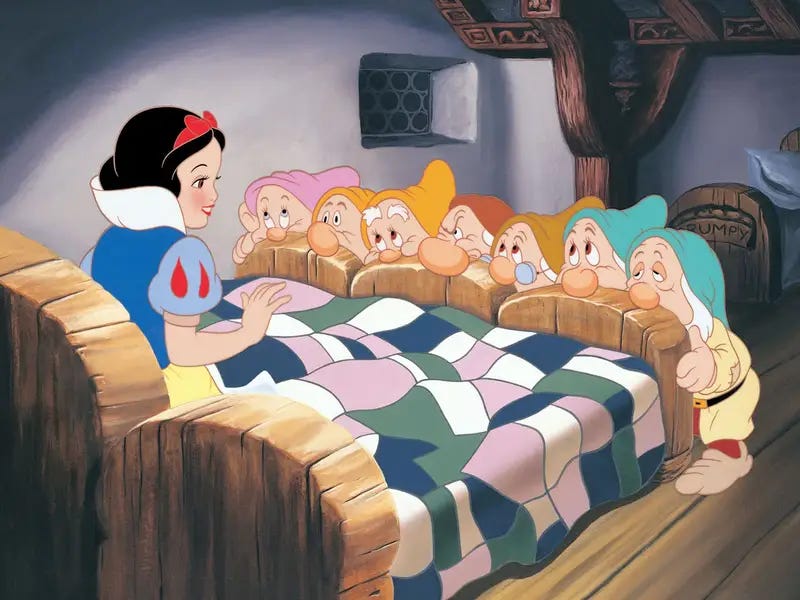
It’s been stated that Snow White doesn’t have much of a personality. I don’t agree with this sentiment. My memory served me well and my latest rewatch presented me with a teenage girl with the personality of one. Passionate about singing and animals, Snow White is kind and nurturing. Throughout the story we are presented by these aspects of who she is. Who she is is more representative of the expectations of women and girls of the time, but she doesn’t lack individuality.
Snow White is more domestic than the Disney Princesses who would emerge with Ariel in 1989. The specific duties expected of a house wife and doted on the Seven Dwarves like a mother. While the princesses themselves where supposed to be a fantasy, they are still supposed to be an example. Intentional or not, Snow White is an ideal in terms of wives and mothers that cook and clean. This tradition continued through Cinderella and Aurora in the 50s.
Snow White was an achievement for Walt Disney and the studio. Beyond being a technical and financial success the film managed to inspire artists in the industry and continues to do so. Till this day, Snow White’s achievement is celebrated because it let animators know what could be done. While studios today rely on churning out feature films and TV shows multiple times a year, including Disney, Disney at the time was able to dedicate time and money to create a masterpiece. With those 750 artists and the inspiration of German Expressionism, Disney created Snow White and the Seven Dwarves.


Leave a Reply