

In 1972, The Stepford Wives was published, a novel that would bring a lexicon to the English language. Written by Ira Levin who is also known for his novels Rosemary’s Baby and The Boy’s from Brazil, The Stepford Wives is satirical feminist horror. Adapted twice in 1975 and 2004, the novel and it’s 1975 adaptation touch on men and women’s fears, and how those fears are different. The novel and original film were made during second wave feminism and while the 2004 remake might have overshadowed the 1975 adaptation, it didn’t out do it. With each passing decade The Stepford Wives remains an important work. A novel that doesn’t quell women’s fears, it validates them.
Inspiration Behind The Stepford Wives
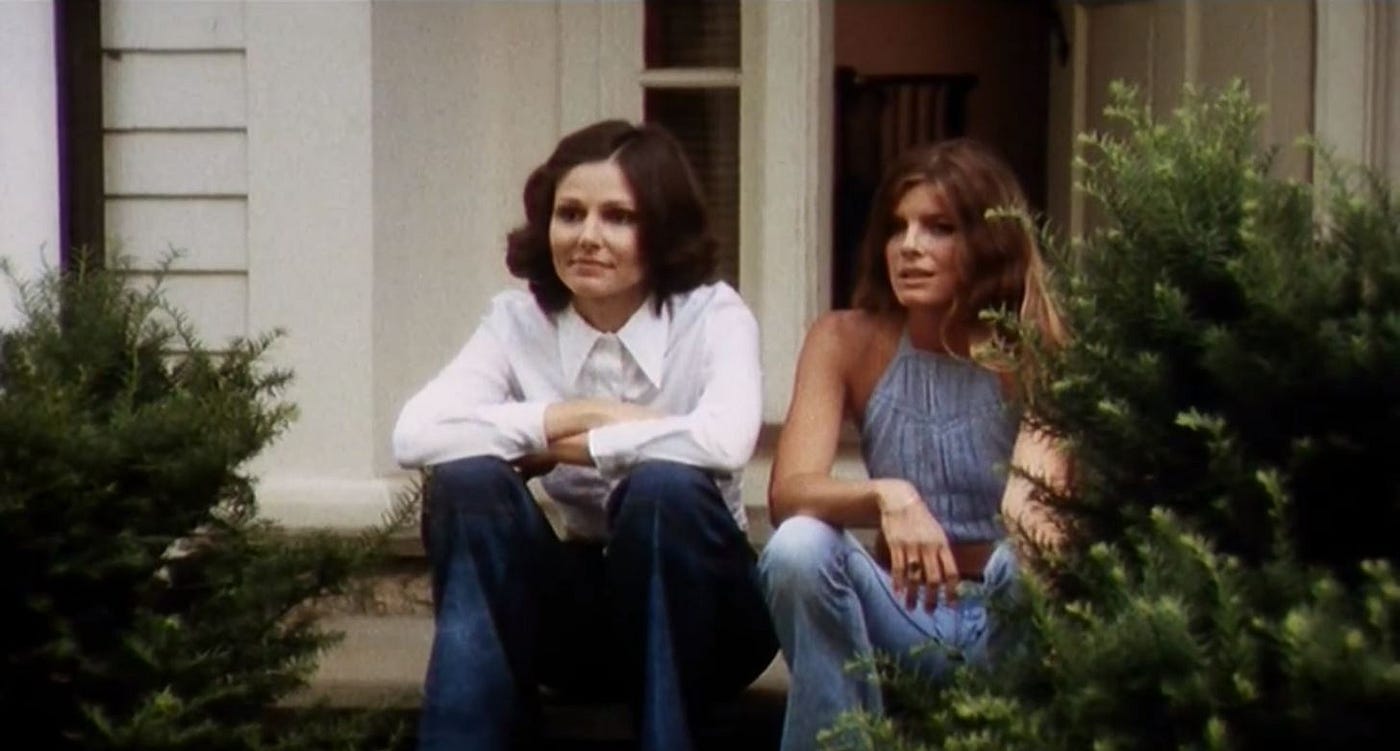
The 1975 film doesn’t make many changes from the original novel. Protagonist Joanna Eberhart moves with her husband and two children to Stepford, Connecticut. At the start of the film we see them moving out of the city with one of the couples children witnessing a man carrying a “naked lady,’ when what she really sees is a mannequin. Joanna takes a picture revealing her passion and from the start we are shown almost exactly who she is. In the novel Joanna is talking to the welcome wagon lady that works for the Chronicle. She hands her a bunch of products for her home and asks her a few questions for the paper. Immediately we are aware of the differences between Joanna and the women of Stepford.
Ira Levin wrote the original novel following his divorce and based Stepford on his former home in Connecticut. He was inspired by Alvin Toffler’s book Future Shock on domestic robots. Joanna is a sympathetic protagonist who is able to maintain her identity while going against the norms of Stepford. She is a feminist and like her feminist friends they are not presented stereotypically.
An inspiration for Jordan Peele, The Stepford Wives is an early example of suburban horror. In the 1970s the burbs as some might call it were not new. They were, however, expanding. More and more middle class white women were refusing to conform to societal pressures. They were entering the workforce that working class, black women, indigenous women and women of color were already used to. What all these women had in common were the daily expectations of the patriarchy. Even if they looked a little different those expectations were still present.
Before 1970 there were plenty of women in the work force. Women in the 40s took the jobs men left behind during WWII. In the 1950s, the expansion of suburban life had many middle class women returning to the kitchen. Not everyone was happy with this arrangement and there were many women who began to protest these “conditions”. As more things begin to change, men grew tired of women’s expectations. When things change, those that lose out tend to retaliate. I guess we can be glad that The Stepford Wives is just a fictional novel and not real life. Or is it?
Second Wave Feminism, Women’s Liberation, and the Reaction to The Stepford Wives
Second Wave Feminism had its faults. A big one being that it centered middle class white women, particularly within certain groups. In the novel there is a moment where Joanna is looking through her photographs and she notices one of a black man trying to hale a cab, he is passed over for a white man. Joanna here is using a black mans experience of racism for her own gain. Intentional or not this moment showed that Joanna is a women of privilege even if she lacks that privilege elsewhere. The novel did a good job at presenting Joanna as far more than an expectation of feminism. It showed that feminists can engage in racist and other harmful behaviors. Despite her fears being realized, she herself has benefited from the fears and realities of others.
In her 2022 article, Suburban living did turn women into robots’: why feminist horror novel The Stepford Wives is still reverent, 50 years onMichelle Arrow writes,
“not only a satire of male fears of women’s liberation, but a savage view of heterosexual marriage. In this telling, a man would rather kill his wife and replace her with a robot than commit to equality and recognize her as a whole person.”
The Women’s Liberation Movement was dedicated to ending women’s unpaid servitude or at least balancing things out. Even in 2025 women do the majority of unpaid labor in the home. As more women grew tired, more men grew fearful of change brought on by Second Wave Feminism and The Women’s Liberation Movement. Even in areas were equality was being fought for, women still had to fight for a seat at the table. Women being second class to men was expected in many circles including leftist ones.
When the 1975 film adaption was released it received mixed reviews. Big names in the feminist movement denounced the film. Betty Frieden, who wrote The Feminist Mystique was not fond of the film. She saw it as a “rip-off of the women’s movement.” In the New York Times article covering the screening of the film to Feminist women, Linda Arkin said of the film,
“I couldn’t believe the film. It dumps on everyone-women, men, suburbia. It confirms every fear we’ve ever had about the battle of the sexes, and it says there is no way for people to get together and eat humans lives”
While some feminist’s looked down on the film, others praised it. Gael Greene said of the film, “I loved it—those men were like a lot of men I’ve known in my life.”
How Joanna’s Fears Mirror Our Own
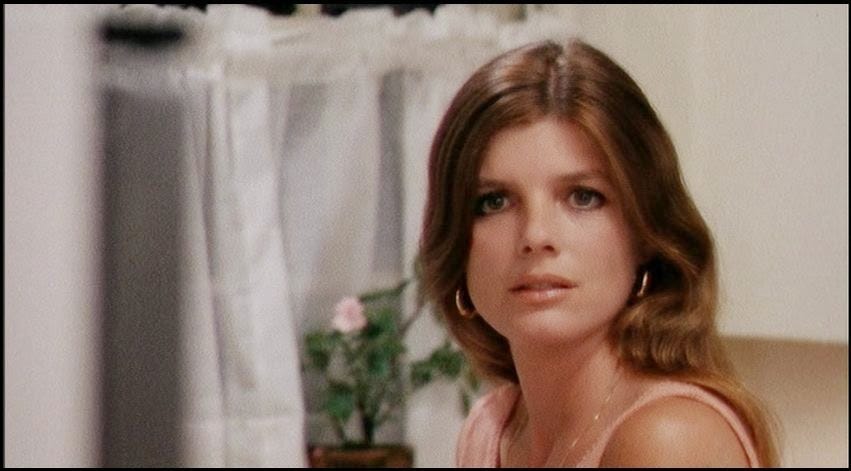
There will be somebody with my name, and she’ll cook and clean like crazy, but she won’t take pictures and she won’t be me.
The Stepford Wives 1975
Joanna has dreams of making it big and as she learns more about Stepford she begins to fear that those dreams will stay just that. As a modern viewer I share many of Joanna’s fears. While they might not mirror each other completely, todays political climate has instilled in me a fear I’ve never had before. The fear that Joanne has here, one that will stop her from being the women she is. Joanna fears being pushed into a lifestyle that she doesn’t want and becoming what others expect of her.
Joanna sees as the women around her are dressed in more modest dress while still showing off a near perfect figure. She loves to cook, clean, and take care of her husband. She doesn’t talk back or engage in politics. Equality isn’t something she thinks about. In the novel, the wives are dressed in playboy bunny attire but I believe that the changes made for the film suit the over all narrative better. The more conservative outfits present in the movie give off a more victorian look. While they cover up a lot of the body, they do not overpower her figure. The women could still be show off to men while keeping the rest of it for themselves.
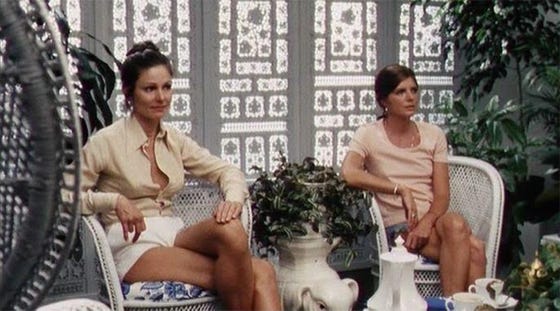
While Joanna is a women of her time and represents middle class women, a group that is becoming smaller every second, we are still able to relate to her struggles. Joanna is a wife and mother who hopes to grow her career as a photographer. Her once supportive husband has been listening to other men and is taking in their chauvinistic ideas. Because of this Joanna and her husband Albert begin to drift apart. Unbeknownst to Joanna, her husband begins toformulate other plans with the help of his new friends.
The horror present in The Stepford Wives is one that is all too real. In 2025, we are seeing as both men and women fall for harmful rhetoric that puts women in unhealthy and dangerous situations. The environments they inhabit are meant to be traditional. That tradition unfortunately puts marginalized people in harmful positions. Sometimes when I scroll past videos of Tradwives I feel like Joanna walking in the supermarket in Stepford. When I come upon a clip of alpha male podcast I feel like I’ve entered a familiar place but one I don’t want to inhabit. The Stepford Wives is a cult favorite and a reminder why women choose the bear.
 Ainsley Peace
Leave a comment